


Understanding the Modern Browsing Landscape and the Need for Built-In Protection
The way we experience the internet has changed dramatically over the last decade. What once felt like an open, relatively uncluttered space has evolved into a complex ecosystem of advertisers, trackers, pop-ups, autoplay videos, malicious scripts, and sophisticated cyber threats. Today, browsing the web often means navigating a maze of intrusive ads, cookie consent banners, hidden trackers, and potentially harmful links. For many users, this results in slower page loads, reduced privacy, higher data consumption, and an overall frustrating online experience. In response to these growing challenges, virtual private network providers have expanded their services beyond encryption and IP masking. One such innovation is CleanWeb by Surfshark, a feature designed to enhance browsing by blocking ads, trackers, malware, and phishing attempts before they ever reach your screen.
To understand why a feature like CleanWeb matters, it is important to consider how modern websites operate. Many online platforms rely heavily on advertising revenue. While ads themselves are not inherently harmful, the ecosystem that delivers them can be. Advertisements are often served through third-party networks, which use scripts and tracking technologies to gather data about user behavior. These trackers monitor browsing habits, collect device information, and create detailed user profiles that are then used for targeted advertising. In addition to privacy concerns, these scripts consume bandwidth and system resources, leading to slower page loading times and increased battery usage on mobile devices.
Moreover, malicious actors frequently exploit ad networks to distribute malware. This practice, known as malvertising, allows harmful code to be embedded within seemingly legitimate advertisements. Users may unknowingly download malware simply by visiting a compromised webpage. Phishing attempts, too, have grown more sophisticated. Fraudulent websites that mimic legitimate services attempt to trick users into entering personal information, passwords, or financial details. As cybercriminals refine their techniques, the average user faces an increasingly complex threat landscape.
CleanWeb addresses these issues by acting as a proactive filter at the network level. Instead of relying solely on browser extensions or antivirus software, it integrates directly into the VPN infrastructure. This means that unwanted content can be blocked before it even reaches the user’s device. By filtering out malicious domains, intrusive advertisements, and tracking scripts at an earlier stage, CleanWeb reduces exposure to online threats while simultaneously improving performance and usability. In an era where digital privacy and efficiency are paramount, such integrated solutions represent a significant evolution in browsing protection.
The importance of streamlined browsing cannot be overstated. A clean browsing environment enhances productivity, reduces distractions, and fosters a more focused digital experience. Whether users are conducting research, shopping online, streaming content, or managing finances, a smoother and safer browsing experience translates into greater confidence and efficiency. CleanWeb is designed with this philosophy in mind, aiming not only to protect users but also to refine how they interact with the web. By eliminating unnecessary clutter and mitigating risks, it transforms browsing from a potentially hazardous activity into a more seamless and secure experience.
How CleanWeb Blocks Ads and Trackers at the Source
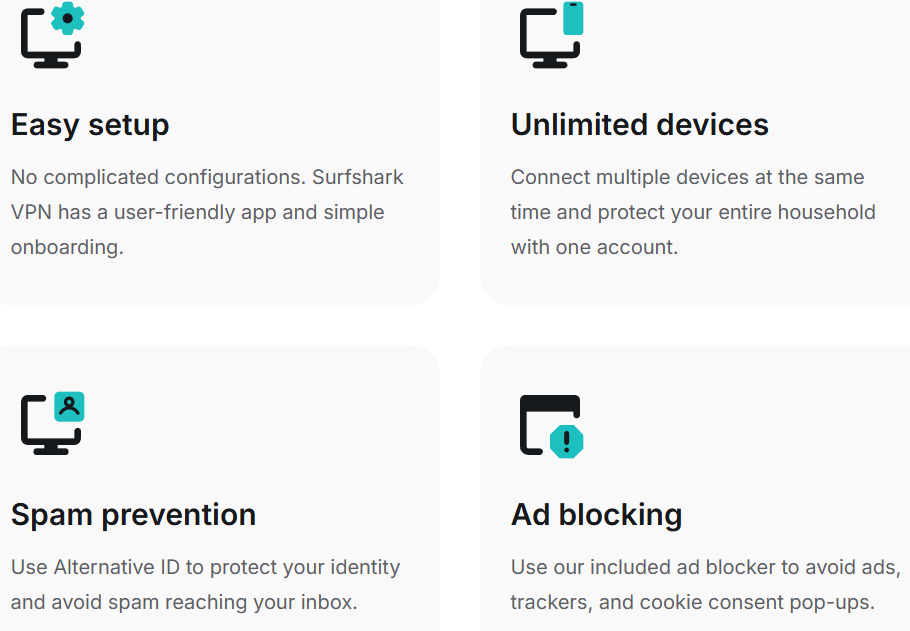
One of the most noticeable benefits of CleanWeb is its ability to block intrusive advertisements and trackers. Unlike traditional ad blockers that function as browser add-ons, CleanWeb operates within the VPN framework itself. When a user connects to Surfshark’s VPN, their internet traffic is routed through secure servers. CleanWeb works alongside this encrypted tunnel, filtering out requests to known advertising, tracking, and malicious domains. Because this filtering occurs at the network level, it applies across supported browsers and applications rather than being limited to a single browser environment.
Advertisements are not merely visual distractions; they often carry heavy scripts that demand system resources. Each ad request may trigger multiple connections to third-party servers, loading images, videos, tracking pixels, and analytics scripts. This cascade of background activity can significantly slow down page rendering. By blocking these requests before they are processed, CleanWeb reduces the number of elements that must be loaded. The result is faster page loading times and a more responsive browsing session.
Trackers operate in a similarly resource-intensive manner. They monitor user activity across websites, collecting information such as pages visited, time spent on each page, clicks, device type, and geographic location. This data is aggregated to build detailed behavioral profiles. From a privacy standpoint, this level of monitoring raises concerns. Many users are uncomfortable with the idea that their browsing habits are being recorded and analyzed without explicit consent or clear transparency. CleanWeb mitigates this issue by preventing communication with known tracking domains. By interrupting these connections, it limits the amount of data that third parties can collect.
Another significant advantage of network-level blocking is consistency. Browser extensions can sometimes conflict with website functionality or be disabled accidentally. They may also fail to filter content in non-browser applications. CleanWeb’s integration into the VPN ensures that protection is active whenever the VPN connection is enabled, offering a more unified approach. This means that ads and trackers embedded within certain apps or webviews are also more likely to be filtered, extending protection beyond standard browsing sessions.
The impact on user experience is immediately noticeable. Pages appear cleaner, with fewer pop-ups, banners, and autoplay videos competing for attention. The absence of constant ad interruptions allows content to take center stage. Reading articles becomes more comfortable, as text is no longer fragmented by flashing advertisements or sudden layout shifts. For mobile users, the benefits are particularly pronounced. Reduced data consumption means lower bandwidth usage, which can be crucial for those on limited data plans. Additionally, fewer background scripts translate to improved battery efficiency.
By removing intrusive elements at the source, CleanWeb redefines how users interact with online content. It shifts control back to the individual, allowing them to focus on information rather than distractions. In doing so, it not only enhances privacy but also contributes to a more streamlined and enjoyable digital environment.
Strengthening Security Through Malware and Phishing Protection
While ad and tracker blocking enhances comfort and speed, CleanWeb’s security capabilities address more serious concerns. The internet remains a breeding ground for malicious activity, and even cautious users can fall victim to cleverly disguised threats. Malware distribution and phishing attacks have become increasingly sophisticated, often masquerading as legitimate services or embedding themselves within seemingly harmless content. CleanWeb strengthens security by proactively identifying and blocking access to known malicious domains.
Malware can infiltrate devices in numerous ways, including drive-by downloads, infected attachments, compromised websites, and deceptive advertisements. Once installed, malicious software can steal sensitive information, monitor activity, encrypt files for ransom, or even grant remote control of a device to attackers. Traditional antivirus software typically detects threats after they have been downloaded or executed. CleanWeb, however, works preventively by blocking connections to domains associated with malware distribution. If a user attempts to access a site flagged as harmful, the request is stopped before any malicious content is delivered.
Phishing presents another critical risk. Fraudulent websites often imitate banks, social media platforms, streaming services, or online retailers. These pages are designed to look authentic, encouraging users to enter login credentials, credit card numbers, or personal data. Phishing campaigns frequently rely on urgency and deception, such as warning users of account suspension or suspicious activity. CleanWeb helps mitigate this threat by maintaining updated lists of known phishing domains and preventing access to them. By intercepting these connections, it reduces the likelihood of users being tricked into compromising their information.
An essential aspect of CleanWeb’s security function is its seamless integration. Users do not need to configure complex settings or monitor threat databases manually. The filtering process occurs automatically once the feature is enabled. This simplicity makes advanced protection accessible even to individuals who may not be technically inclined. In a digital environment where threats evolve rapidly, automated safeguards provide an additional layer of reassurance.
Security enhancements also contribute indirectly to improved browsing performance. Malicious scripts and hidden crypto-mining operations consume significant processing power. By blocking harmful domains, CleanWeb prevents these resource-draining activities from executing in the first place. This not only protects personal data but also preserves device performance and longevity.
In essence, CleanWeb transforms the VPN from a purely privacy-focused tool into a more comprehensive security solution. Encryption alone shields data in transit, but it does not prevent users from accessing dangerous websites. By combining encrypted connections with domain-level filtering, CleanWeb addresses both confidentiality and integrity. The result is a browsing experience that feels not only private but genuinely safeguarded against a wide range of digital threats.
Enhancing Speed, Performance, and Overall Usability

Performance is a key factor in user satisfaction, and CleanWeb’s impact on browsing speed is one of its most tangible benefits. Every element that loads on a webpage consumes bandwidth and processing power. Advertisements, tracking scripts, pop-ups, and embedded widgets can collectively add significant weight to a page. When these elements are blocked, the amount of data transferred is reduced, allowing pages to load more quickly.
Faster loading times improve productivity and reduce frustration. Waiting for cluttered pages to render can interrupt workflow and diminish the efficiency of online tasks. Whether conducting research, participating in online learning, or managing business operations, smoother navigation enhances focus and momentum. CleanWeb’s filtering reduces the digital noise that often disrupts this flow.
Mobile users benefit significantly from these optimizations. On smartphones and tablets, network conditions can vary widely depending on location and signal strength. By minimizing unnecessary data requests, CleanWeb helps maintain consistent performance even on slower connections. Lower data usage is particularly valuable for users with capped data plans, as blocked advertisements and trackers translate directly into reduced consumption.
Battery life is another often overlooked aspect of browsing performance. Each background script and auto-playing video demands energy from the device. Over time, these cumulative processes can drain battery levels more rapidly. By preventing unnecessary scripts from running, CleanWeb contributes to improved energy efficiency. For users who rely on their devices throughout the day, this can make a meaningful difference.
Usability improvements extend beyond speed. The visual clarity achieved by removing intrusive elements creates a more pleasant reading and viewing experience. Layout stability improves because advertisements frequently cause content to shift as they load. Such shifts can lead to accidental clicks or disrupted scrolling. CleanWeb’s blocking mechanism stabilizes page structure, allowing users to interact with content more comfortably.
In addition, the reduction of pop-ups and redirect attempts minimizes disruptions. Some websites use aggressive advertising techniques that trigger automatic redirects to promotional pages. These interruptions can break concentration and sometimes lead to questionable websites. By blocking many of these redirect mechanisms, CleanWeb fosters a more controlled and predictable browsing session.
Ultimately, performance enhancements contribute to a broader sense of digital well-being. When browsing feels smooth and uninterrupted, users are less likely to experience frustration or fatigue. CleanWeb’s combination of speed optimization and clutter reduction elevates the everyday online experience, making it more efficient and enjoyable.
Building a More Private and Focused Digital Environment
Privacy concerns have become central to discussions about internet usage. As data collection practices grow more pervasive, many individuals seek tools that restore control over their digital footprint. CleanWeb contributes to this effort by limiting exposure to tracking mechanisms and malicious domains. By preventing communication with numerous third-party servers, it reduces the volume of personal data shared during routine browsing.
A private browsing environment fosters greater confidence. Users can explore information, research sensitive topics, and engage with online communities without constant monitoring from advertising networks. While no tool can guarantee absolute anonymity, reducing tracker activity significantly diminishes the scope of behavioral profiling. CleanWeb works alongside VPN encryption to create a layered approach to privacy, addressing both data interception and data harvesting.
Focus is another valuable outcome. The modern internet often feels fragmented by attention-grabbing advertisements and notifications. CleanWeb’s filtering restores a sense of simplicity, allowing content to stand on its own. Readers can engage with articles without being distracted by flashing banners or auto-playing media. Students can study online materials without intrusive pop-ups interrupting their concentration. Professionals can manage projects and communications in a more streamlined environment.
The psychological effect of a cleaner interface should not be underestimated. Visual clutter contributes to cognitive overload, making it harder to process information efficiently. By removing unnecessary elements, CleanWeb helps create a calmer digital space. This clarity supports deeper engagement and sustained focus, qualities that are increasingly rare in today’s hyperconnected world.
Furthermore, the sense of security that accompanies proactive protection enhances overall satisfaction. Knowing that malicious domains are being filtered and that trackers are being limited provides reassurance. Users can navigate the web with reduced anxiety about hidden threats. This peace of mind is a significant component of a positive browsing experience.